Pages

Saturday, October 30, 2010

Acupuncture Pictures: Beijing Hospital Internship

1: Back after Guisha (scraping treatment) 
2:Tungsten needled placed near spine
3:  Manipulation 
4: and 5: adjustment of herniated disk 
6: Dr Bai with a giant banner from a patient expressing thanks for another successful treatment. Chairman Mao in the foreground

Friday, October 29, 2010

China Japan Friendship Hospital, Beijing: Acupuncture Department with Dr. Bai, part one.

Looking around a room you see four beds, two chairs and a green two seat armless sofa. A plastic statue of Mao’s bust, encased in square clear plastic,  looks on. The light pours in through two big windows either side. Near, there is a patient sitting on a wooden chair. There are other patients waiting for treatment too. You see intern student physicians in white coats standing and looking on. They look worried. A 40 year old Caucasian male is biting his lip, a female is looking concerned and another one has widened eyes. One student reaches out to comfort the female patient. She is sitting with her bare back to us, the wrong way round for how you would normally sit on a chair, legs spread either side. Her arms folded on top, head on her forearms. Her back is purple, red and blotchy from the first part of her treatment: scraping of the skin with a plastic paddle to move the energy in the body. Soon a powerful force is about to be unleashed. One fellow student places their foot on the bottom horizontal bar of the chair to create a brace. The patient says something in Chinese to the doctor. Doctor Bai hits her on the shoulder with an open hand and pushes her head further forward and down. A tungsten needle is heated red in a flame held by an assistant. Dr. Bai, standing spread legged behind, plunges the needle deep and without hesitation into the base of the head next to the third vertebrae. A cry out of pain from the patient. The smell of singed skin. Dr. Bai places the palm of her open left hand on top of the free end of the stuck, thick needle and rotates it around in a big circle, manipulating it. The patient whimpers and the spine is felt with the free right hand. Then the needle is manipulated again and the patient stamps her feet on the ground. Another open hand slap by the doctor and we are ready to begin the adjustment of her herniated disc. Dr. Bai instructs the patient to call out a giant “huh” sound. She does this by shouting a large “huh” herself and nudging the base of the needle against the skin. Her left hand now fisted and the pointing finger second knuckle placed left of the base of the lodged needle, next to the herniated disc which is protruding left internally from the spine, Dr Bai releases a giant “huh”. With this her force of strength and body weight are thrown against the needle and against the patient’s spine. Both patient and doctor give a giant “HUH”. One in effort and one in pain, the creaking chair lurching sideways under the pressure. Then again, and another time and then again and another time for good measure. The needle is taken out, red heated and plunged again. This time centrally on the vertebrae bone or possibly on the herniated disk itself or close above. With crying out and “Huh”s the process continues. After this then again on the right hand side of the spine. The previous treatment’s dark marks, and scars, giving guidance of where to place the needle again. That’s because this patient we saw had returned to endure and suffer this. Maybe five times or so. Why? One stating they would prefer this than getting an operation. At the end Dr Bai brushes her hair from her forehead and continues to the next patient for treatment.
The patient? I’ve actually never seen a reaction like it. After treatment she was positive, smiling and happy. Dr Bai’s statement:" Everyone feels ten years younger after treatment". Incredibly it’s true somehow and they keep coming back for the effective results.
At 70 something Dr. Bai is fit, strong and generous. She will do these treatments as she has seen results for this type of case possible thousands of times over numerous years. She gets excited to tell you about what is happening and she takes the time to explain what’s she is doing between rigorous treatments.
Previously the head of Acupuncture at the China Japan Friendship hospital she has reached a legendary status. Appearing on the front cover of a magazine recently she was stated as being one of the top ten people in China! She is one of Beijing's most renowned practitioners and specialises in treating complicated musculoskeletal, neurological, digestive and respiratory conditions.
Still the first words I wrote in my notebook after my first 2 hours of clinic as a reflection of what was going on were: rough, aggressive and gut wrenching. The first two days my brain was paralysed with shock!

More soon about other amazing treatments and my own personal reflections and hopefully video and pictures too.

Tuesday, October 26, 2010

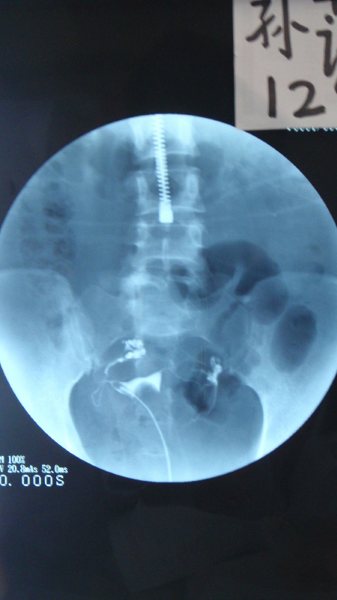
Beijing Hospital TCM Gynaecological Department Here's the TCM Ward I was in during the week. Check out the Dan Shen coloured saline drip. X-ray showing upward facing right ovary. The great nurses. Me and and an intern doctor on my right and Dr. Wang Qing on my left, responsible for the Endometriosis formula research, in the doctor's office on ward. Last pictures are in outpatient clinic with Dr Xu Run San and intern doctors and the very helpful Dr Li.


Beijing: Second week. In the hospital gynecological department, part two

In this post I will introduce the gynecological ward to you, one of the legend doctors who works there and some more in depth analysis of some of the “interesting” techniques they use to help patients and also the pulse analysis for determining the sex of a baby…

Doctor Wang Qing outlined the ward for me. There are 18 beds for various gynecological conditions. Mostly infertility cases, covered by 3 doctors. Patients are admitted through the outpatients’ room downstairs and on to the ward. Here they may be treated by the same doctor seen in outpatients downstairs. The doctors rotate one day in outpatients and one day on the ward with inpatients.

The ward was in a lot better shape than the oncology ward I had witnessed. One experienced nurse in our group stated that all oncology wards can be a bit “rough”. The TCM Gynecology ward was painted in mostly pink and everybody was a bit more relaxed in pink pajamas too. It felt like it had a pleasant atmosphere. Patients spend a minimum of two weeks getting treatment.

Most patients were put on IV drip with saline and a base of Dan Shen ( Blood Activating herb) and Huang Qi (Qi Tonifying herb). This lends an orange colour to the saline, check out the picture soon (also notice the old style glass bottle saline holder). This combination helps the patients beat fatigue and apparently the tonifying effect is overall very pleasant and calming J

Also I have added a picture of an x-ray of the common situation of the ovaries being too high/raised upwards in the opposite direction for you to see.

Two interesting techniques, unique to TCM, came up which I will now outline. One was the use of electrical abdominal stimulation combined with herb use. Cotton pads were soaked in herbs and placed on the abdomen above the ovaries. TENS pads (electro stimulation) were used for 20-25 minutes above the herb pads. I saw two patients having this treatment, next to each other on the ward. One was diagnosed with menopause and the other I didn’t catch, but they used the same herb formula to soak the pads in.
Zhi Qiao 10 ( alternate name is Zhi Ke) See this interesting Blue Poppy post on the intricacies of naming herbs! http://www.bluepoppy.com/blog/blogs/blog1.php/2010/01/27/zhi-ke-or-zhi-qiao
San Leng 15
Bai Zhi 10
Zhen Zhu 15 (Pearl: this probably incorrect as I cannot see the public hospital system using loads of this?!)
Bai Jiang Cao 15
Hou Po 10
Mo Yao 10 (Myrrh)
Ru Xiang 10 (Frankincense) Love seeing these two herbs in formulas and they are well known for treating traumatic pain
Hong Hua 10
Dang Gui 10
Chi Shao 20
Gui Zhi 15
E Jiao 15

Another technique on the ward was the placement of warm bags containing cooked herbs on the patient’s abdomens. This was indicated for infertility for a range of cases from endometriosis, pelvic inflammatory disease, issues with fallopian tubes. It was avoided during period and was used for 3 months, on ward and also at home. After this time it was advised to try for pregnancy.
Bai Zhi 10
Chao Zhi Qiao 10 ( See above about Zhi Qiao)
San Leng 15
Gui Zhi 15
Dang Gui 10
Hong Hua 10
Cang Zhu 15
Su Mu 10
Bai Jiang Cao 15
Hou Po 15
Mo Yao 10
Mu Xiang 10
Huang Bai 10
Chi Shao 20
Tou Gu Cao 30 (this is not a very commonly used herb) Speranskia is acrid with a warm energy. It enters the liver, spleen, and kidney.

Also herb enemas are practiced, but I didn’t manage to get any information on that.

Finally it’s worth noting Dr Xu Run San. Xu is his family name, Run means nourishing and San translates as second brother I think. On the Wednesday I saw him do his rounds on the ward and on Friday I saw him in outpatients clinic. Two things: He’s one of the top doctors for Gynecology, in China! And he’s still practicing at 86 years old. When I saw him in the ward he came in holding hands with his wife. Anyway I took some pictures on ward and in outpatients. I think just by these few pictures you get an idea of his good humour and generosity.
This is where he practices when not in the hospital:

Oh yeah finally I had the chance to practice predicting the sex of an unborn child from the pulse. Left side is Blood and represents Yin (feminine quality). Right side is Qi and represents Yang (masculine quality). If the pulse of the mother is stronger on the Yin/left side it’s a girl. If it’s stronger on the Yang/right side it’s a boy. I got the prediction wrong (the mum knew from previous ultrasound). But this is all according to what theory you practice and the left and right can swap around with different theories-classic Chinese medicine, I just picked the wrong theory..!

Inside the Gynaecological Outpatient Department Here I am with intern doctors and prescribing doctors. Gives you an idea how big and busy the room can get. The red banner on the wall is given to doctors by patients expressing good wishes for treatments. Face masks are a regular feature in the hospital and even on the streets here. As you can see there is a lot of good will in these pictures :)


LinkWithin

Related Posts with Thumbnails